
National coverage called the Geno Smith trade a stopgap. The pricing model says it's bigger than that. Here's how a single QB move resets four different lines at once.
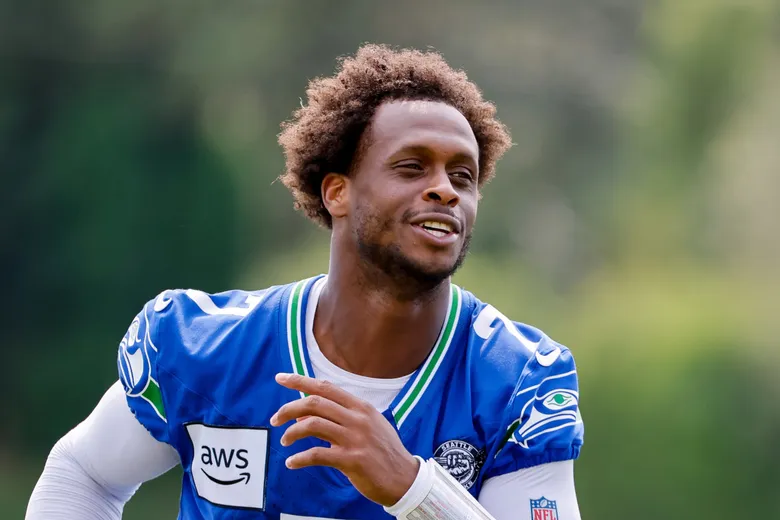
When the Jets traded for Geno Smith this offseason — sending a 2026 sixth-rounder for Smith and a 2026 seventh — the national narrative was clear: bridge quarterback, one-year deal, not the answer. That framing isn't wrong. It also undersells the impact for anyone running a Pick'em arena.
A single quarterback move at the right time changes four pricing inputs at once. Here's what that looks like for the Jets.
New York entered the offseason without a long-term answer at quarterback and without the draft capital to climb up for one. With no surefire first-round QB available behind Indiana's Fernando Mendoza, the Jets used the No. 2 overall pick on a non-QB and added Smith as a one-year bridge.
Smith struggled in 2025 in Las Vegas: 67.4% completion, 3,025 passing yards, 19 touchdowns, a league-worst 17 interceptions in 15 games — and 55 sacks taken, tied for the league lead.
But context matters. The Raiders' 2025 offensive line was widely viewed as one of the worst in football. Smith's two Pro Bowl seasons in Seattle (2022–23) showed what he can do behind a competent line.
The Jets' line, after their offseason additions (Dylan Parham at guard and the rest of the unit), is meaningfully better than what Vegas put around Smith last year. Smith with average pass protection has historically been a top-15 quarterback. Smith pressured on every drop-back is what 2025 looked like.
When a team gets a new starter at the most important position, three things shift simultaneously: win total, implied team scoring, and divisional spread pricing. The casual market is slow to catch all three.
Single-player roster moves are exactly the kind of inefficiency the BenchBrawl scoring engine rewards. The closing line eventually catches up. Players who price the change earlier than the market score more points.
Track player moves in a season-long arena →
Sources
No purchase necessary. Void where prohibited. State restrictions apply.
When the Jets traded for Geno Smith this offseason — sending a 2026 sixth-rounder for Smith and a 2026 seventh — the national narrative was clear: bridge quarterback, one-year deal, not the answer. That framing isn't wrong. It also undersells the impact for anyone running a Pick'em arena.
A single quarterback move at the right time changes four pricing inputs at once. Here's what that looks like for the Jets.
New York entered the offseason without a long-term answer at quarterback and without the draft capital to climb up for one. With no surefire first-round QB available behind Indiana's Fernando Mendoza, the Jets used the No. 2 overall pick on a non-QB and added Smith as a one-year bridge.
Smith struggled in 2025 in Las Vegas: 67.4% completion, 3,025 passing yards, 19 touchdowns, a league-worst 17 interceptions in 15 games — and 55 sacks taken, tied for the league lead.
But context matters. The Raiders' 2025 offensive line was widely viewed as one of the worst in football. Smith's two Pro Bowl seasons in Seattle (2022–23) showed what he can do behind a competent line.
The Jets' line, after their offseason additions (Dylan Parham at guard and the rest of the unit), is meaningfully better than what Vegas put around Smith last year. Smith with average pass protection has historically been a top-15 quarterback. Smith pressured on every drop-back is what 2025 looked like.
When a team gets a new starter at the most important position, three things shift simultaneously: win total, implied team scoring, and divisional spread pricing. The casual market is slow to catch all three.
Single-player roster moves are exactly the kind of inefficiency the BenchBrawl scoring engine rewards. The closing line eventually catches up. Players who price the change earlier than the market score more points.
Track player moves in a season-long arena →
Sources
No purchase necessary. Void where prohibited. State restrictions apply.